
Sen. Gounardes’ Bill to Study State Role in Last-Mile Trucking Pollution Crisis Passes State Senate
Bill would ensure studies consider the role the state has played in pollution through its permitting process
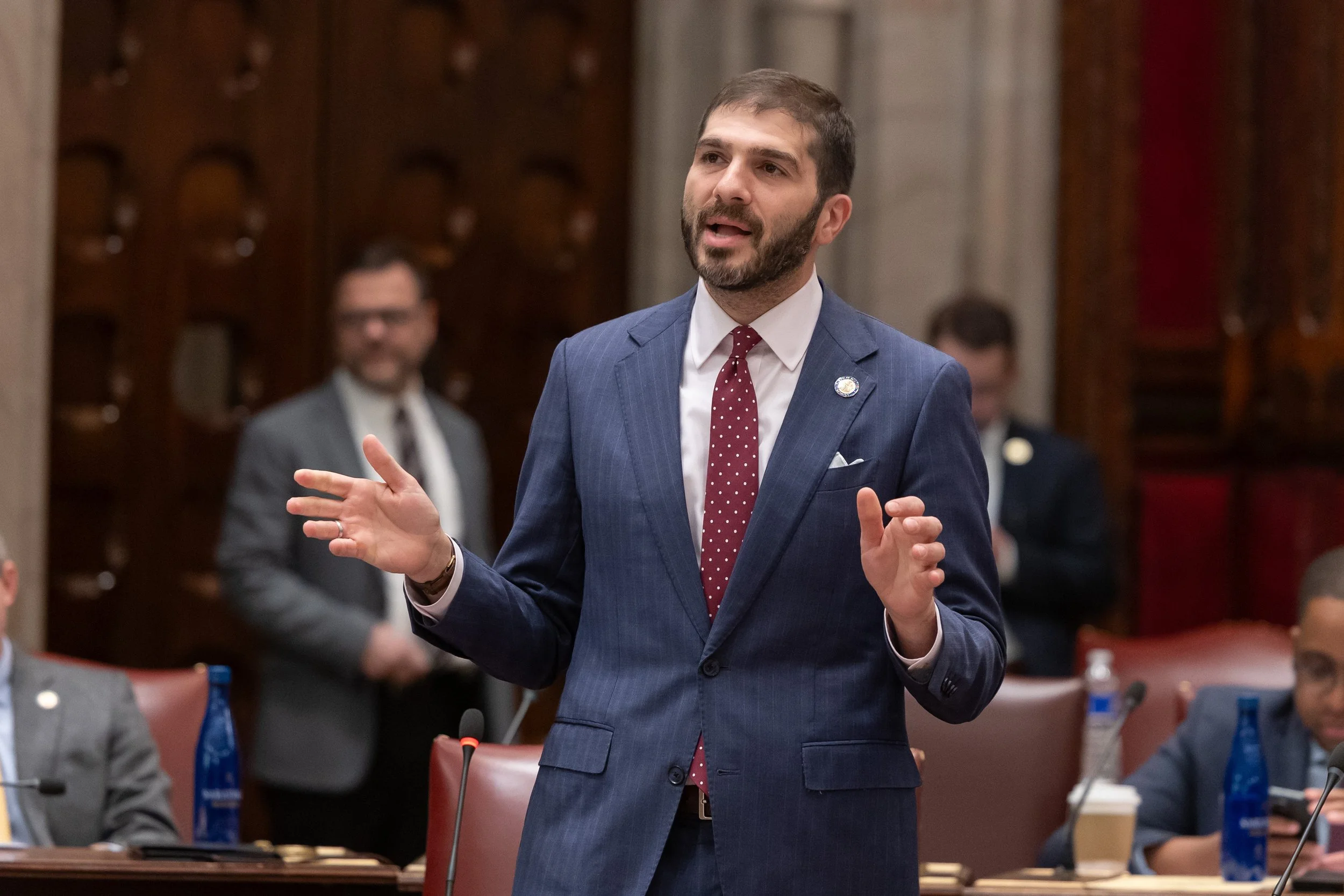
FOR IMMEDIATE RELEASE: MAY 18, 2026
New York State Senator Andrew Gounardes issued the following statement after the State Senate voted to pass his bill to ensure air monitoring studies take state actions into account while studying last-mile trucking impacts:
“Our neighbors in Sunset Park and Red Hook have known the truth for years: the explosion of last-mile trucking has made our air more polluted and our streets less safe. To do right by our communities, we need an honest accounting of what’s happening on the ground, and that includes the role our own government has played. My bill takes a step toward a safer, cleaner, and fairer future for families in Brooklyn and beyond who have borne the brunt of this public health crisis.”
Background:
New York’s Climate Leadership and Community Protection Act (CLCPA), passed in 2019, mandated that the state’s Department of Environmental Conservation undergo a community air monitoring program to study strategies to reduce air pollution in disadvantaged communities. Missing from the law, however, is a requirement for DEC to look internally at the role it plays in contributing to pollution through its permitting processes.
DEC's Division of Air Resources (DAR) regulates commercial and industrial facilities that pollute by, for example, burning fuel or releasing airborne chemicals. Until the passage of the CLCPA, however, DEC wasn’t required to consider the role these facilities played in attracting indirect sources of pollution such as truck traffic.
Environmental justice communities like Red Hook and Sunset Park have paid the price for the short-sightedness of DAR's permitting criteria, where e-commerce warehouses totaling hundreds of thousands of square feet have come online in recent years. Driven by a surge in demand for overnight deliveries, these "last mile" warehouses have resulted in a barrage of truck traffic in manufacturing zones, where new construction proliferates without an environmental review process or community buy-in. At least 2.5 million packages are delivered in New York City every day—up from 1.9 million in 2019.
Last-mile warehouses have a larger geographic footprint than traditional warehouses, resulting in a higher volume of trucks. DEC's permitting of these facilities, which until the passage of the CLCPA was never required to consider impact on disparate communities, has played a role in the significant levels of air and noise pollution suffered by nearby residents.
According to a policy adopted by DEC in 2022, applicants for air pollution control permits must now include information on any "reasonably foreseeable...indirect emissions" that are “a consequence of the activities of the reporting facility but may occur at sources owned or controlled by another entity" in their applications. But there’s nothing to guarantee that DEC actually rejects a permit based on the scope of such indirect emissions.
This bill (S2493/A3395) makes strides towards a full accounting of our city and state's last-mile trucking problem by including in the CLCPA's air monitoring studies an examination of the role the state itself has played in burdening disadvantaged communities by issuing air pollution control permits.
The proposal is one of several introduced by Senator Gounardes to address the negative impacts of last-mile trucking on communities like those in Red Hook and Sunset Park.
Press Contact:
Billy Richling
Communications Director
State Senator Andrew Gounardes
billy@senatorgounardes.nyc
###